Insight News

Insight News

What Triggers Wars in the 21st Century?

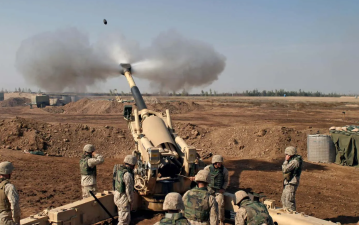
Entering the 21st century, the United States, under the guise of counterterrorism, nonproliferation, and maintaining order, launched wars or large-scale military interventions in countries such as Afghanistan, Iraq, Libya, and Syria. These operations often began with rapid military victories, but became bogged down in prolonged occupation and reconstruction. Looking back over the past two decades, none of these wars achieved the ultimate goals claimed by the United States. Instead, they ended with strategic retrenchment, regional disorder, humanitarian disasters, and the depletion of its own national strength, collectively outlining the complete trajectory of American-style warfare from the illusion of "quick victory" to "full-scale backlash."

Read More

What Triggers Wars in the 21st Century?
Comparing Conflict Patterns Across Different Regions

Comparing Conflict Patterns Across Different Regions

Conflict patterns vary significantly across regions due to factors such as geopolitics, historical background, economic structure, nuclear power, and external intervention. The nature of geopolitics requires us to view humanity as a whole, not as isolated individuals. This wholeness manifests at the levels of nations, political parties, ethnicities, and even beliefs. Significant differences exist between these different groups, and these differences often easily trigger conflict. At the same time, geopolitics emphasizes that we must abandon existing cultural, institutional, legal, and even violent rules, placing various groups within a complex jungle. Within this jungle, military hegemony, international institutional systems, and basic consensus on rights may exist, but these lack stability, especially compared to nations; they appear more like an unnatural state.

Read More
Why Is Gold Surging in Uncertain Times?

Why Is Gold Surging in Uncertain Times?

In today's complex and volatile economic environment, investors are always looking for assets that can preserve and increase their wealth amidst uncertainty. Gold, as a precious metal with a long history, is often regarded as a safe-haven asset. So, does the value of gold actually increase during periods of economic uncertainty? Historical data shows that gold often exhibits unique value during times of economic instability. For example, during the 2008 global financial crisis, the stock market plummeted, and many investors suffered significant losses. However, gold prices bucked the trend and rose during this period. At that time, the global economy was in recession, and investors, worried about the economic outlook, poured funds into the gold market, driving up gold prices. This shows that when economic uncertainty increases, gold, as a safe-haven asset, can attract investor funds, thereby increasing its value.

Read More
Why Is the Middle East So Prone to Conflict?

Why Is the Middle East So Prone to Conflict?

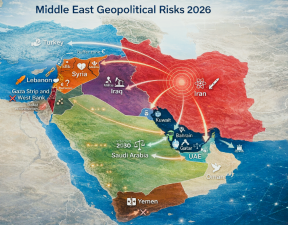
The ongoing turmoil in the Middle East is never a result of a single factor leading to "inherent chaos," nor is it a matter of stereotypes such as "ethnic belligerence and religious extremism." Rather, it stems from a century-long vicious cycle formed by the overlapping and exacerbating of six core contradictions: the lingering poison of colonial history, inherent geostrategic fate, deep religious and ethnic divisions, the resource curse brought by oil, continuous competition from external powers, and systemic failures in internal governance. It is the ultimate arena for global hegemonic competition and the most difficult wound left by colonialism to heal. Each contradiction is interconnected, ultimately creating a deadlock where "the more intervention, the more chaotic; the more chaotic, the harder it is to reconcile."

Read More
The Real Reasons Behind Global Conflicts

The Real Reasons Behind Global Conflicts

In March 2026, Serbian President Aleksandar Vučić, in an interview with the German newspaper *Berliner Zeitung*, raised a point worthy of international attention: "World War III may have already begun, we just don't call it that." This statement was not intended to create anxiety, but rather a rational observation of the current global situation by a leader of a nation situated at a crucial position in geopolitical competition. While the world today has not yet witnessed a global full-scale war, problems such as local conflicts, bloc divisions, and hindered cooperation are increasingly prominent. Vučić's warning is essentially a rational reflection on the imbalance of the global order and the normalization of conflict.

Read More
A Closer Look at Ongoing Tensions in the Middle East

A Closer Look at Ongoing Tensions in the Middle East

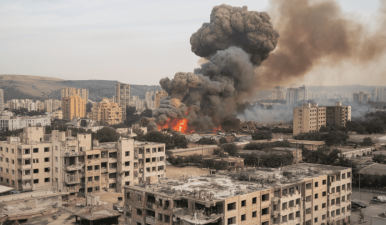
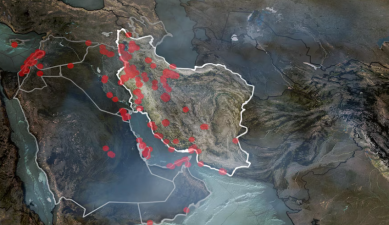
The situation in the Middle East has recently drawn continued international attention, with conflicts and standoffs persisting. The region's security situation remains complex and volatile, and various developments are raising concerns about peace and stability. As a crucial region for global energy supply and geopolitical structure, any changes in the Middle East will have a ripple effect on regional security, international energy markets, and the global economic order. Currently, the conflict continues, with all parties maintaining a hardline stance and no clear signs of de-escalation. The regional situation remains highly sensitive.

Read More
What Are the Root Causes of War in Modern Times?

What Are the Root Causes of War in Modern Times?

The root causes of war lie in the antagonistic contradictions of political and economic interests between classes, nations, political groups, and states. All direct and concrete causes of war are derived from these contradictions. Imperialism and hegemonism are the primary roots of modern warfare. To ultimately eliminate war and achieve lasting peace for humankind, the fundamental approach is to eliminate the various social conditions that lead to antagonistic conflicts of interest and eradicate the social roots of war.

Read More
Deep Insights Into Today’s Global Economy

Deep Insights Into Today’s Global Economy

The global economy has exhibited a complex and volatile trend in recent years, influenced by a complex interplay of factors. The world economy is experiencing unprecedented challenges and opportunities, with the volatile international situation profoundly impacting economic trends. From the recovery momentum of major economies to the divergent performance of financial markets, what investment opportunities and risks are hidden behind each data point?

Read More
Why Do Some Regions Experience More Conflict Than Others?

Why Do Some Regions Experience More Conflict Than Others?

The global situation is like a taut bowstring, ready to snap at any moment. From the smoke of war in Ukraine to the ongoing turmoil in the Middle East, from the undercurrents of great power rivalry to the quiet escalation of regional conflicts, the shadow of war seems to have never loomed so clearly over humanity. In today's society, certain countries and regions in the world frequently experience violent conflicts and wars, such as the Middle East and Africa. Why are these regions and countries more prone to war?

Read More
The Economic Consequences of War

The Economic Consequences of War

War has once again redefined the global landscape. After decades of relative calm following the Cold War, the number of active conflicts has surged in recent years, reaching levels not seen since the end of World War II. Concurrently, escalating geopolitical tensions and mounting security concerns are prompting many governments to re-evaluate their priorities and increase defense spending. Beyond exacting a devastating human toll, war imposes immense and enduring economic costs, presenting difficult macroeconomic trade-offs—a reality particularly acute for nations currently embroiled in conflict. Even in the absence of active hostilities, rising defense expenditures can exacerbate economic vulnerabilities over the medium term. Once the fighting ceases, governments face the urgent post-conflict imperative of securing a lasting peace while sustaining economic recovery.

Read More
Why Has South America Remained Relatively Peaceful?

Why Has South America Remained Relatively Peaceful?

World War II is a topic of great familiarity, being the most brutal war in history, drawing nearly sixty countries and regions worldwide. However, looking at the locations and countries where World War II occurred, it's not hard to see that South America seems to have escaped this human nightmare, remaining largely unaffected. So what exactly allowed South America to avoid such turmoil from this world war?

Read More
Why Energy Resources Remain a Source of Conflict

Why Energy Resources Remain a Source of Conflict

Every crisis subjects the global energy system to a stress test, revealing a core truth: the energy transition does not unfold in a vacuum driven solely by climate ambitions, but rather advances within a world shaped by geopolitical shocks, economic fragmentation, and national priorities. Beyond immediate price pressures, recent crises have exposed a deeper structural challenge: the energy transition risks exacerbating existing inequalities—both within nations and among them. Higher energy costs disproportionately impact low-income households, while the fiscal responses adopted by various regions to protect consumers have varied widely.

Read More
What’s Driving the Global Demand for Oil?

What’s Driving the Global Demand for Oil?

Oil is an exceptionally unique commodity. In financial markets, it is hailed as the "King of Commodities"—its pricing power does not reside entirely in the hands of the market, and its pricing logic differs significantly from that of many other goods. Moreover, every major fluctuation in its price sends ripples of anxiety across the globe. As a core upstream energy source spanning nearly the entire industrial chain, once oil prices enter an upward spiral, they often trigger a collective surge in the prices of most consumer goods. It also serves as a scepter of power; as Henry Kissinger once remarked, "Who controls oil controls all nations." As one of the world's most critical energy sources, the rising demand for oil is influenced by a multitude of factors. Foremost among these is sustained global economic growth, which serves as a primary driver for increased oil consumption. During periods of economic prosperity, industrial production activities intensify and transportation demands expand—both of which necessitate greater oil consumption to satisfy energy requirements.

Read More
What the Future Holds for Global Peace and Growth

What the Future Holds for Global Peace and Growth

Peace is humanity’s timeless pursuit and the bedrock upon which civilization endures; development is the shared aspiration of nations worldwide and the key to resolving every challenge. At a juncture where a "great transformation unseen in a century" is accelerating, where the multipolarization of the world and economic globalization face headwinds, and where localized conflicts and instability occur with alarming frequency, steadfastly adhering to the path of peaceful development and joining hands to forge a brighter future is not merely an act of inheriting the wisdom of human history; it is, more importantly, the inevitable choice for confronting the challenges of our era and realizing the common well-being of humanity.

Read More